
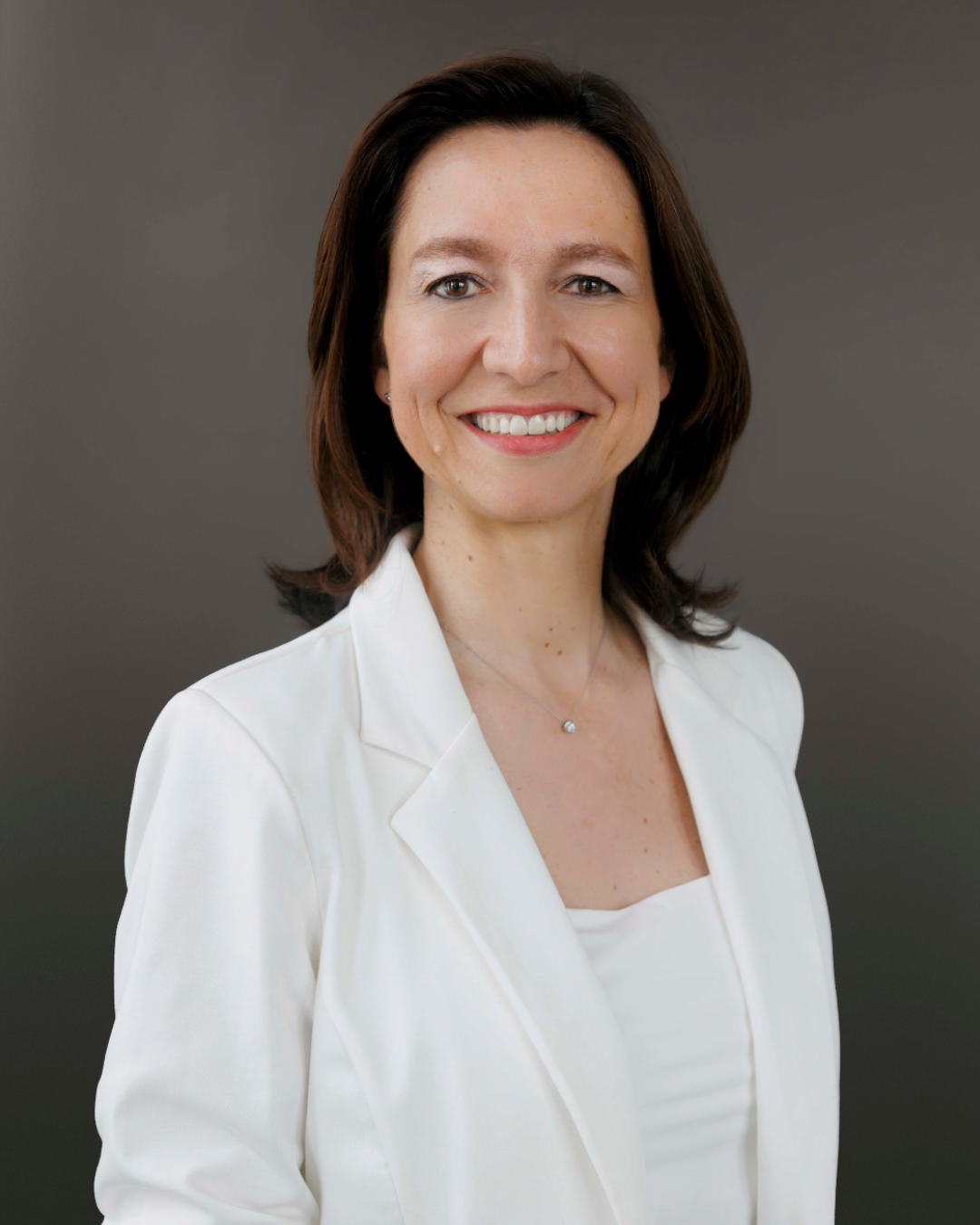
Helena Torras
“She opened doors for others to pass through.”
1. How do you define yourself when no one is looking?
An explorer with curiosity and determination, positive and self-demanding. A connector of concepts, people, sectors, visions. I have a trained intuition that allows me to anticipate, see patterns, and make decisions in moments of complexity or change. A true friend to my friends, and deeply loyal to those who trust me.
2. When you think about your talent, about what you contribute beyond your role, about what makes you unique, what would you say it is?
I think in the medium and long term, connecting what at first glance seems disconnected, helping organizations and people make better decisions at key moments. I have a strategic view that unites technology, people, and business. It comes naturally to me to think differently, see beyond, translate complex ideas into simple words, and anticipate. I don’t think in silos: I connect worlds, people, and opportunities that don’t seem obvious. I’m good at articulating key conversations, building trust, and building long-term relationships. I combine strategic thinking and human sensitivity, and this balance allows me to contribute in spaces where there are tensions between what is wanted, what is possible, and what is convenient. Where there is transformation, I know how to be. Where there is complexity, I provide order and perspective. Where there is dispersion, I build bridges. My thing is to open doors: to people, to ideas, to possible futures.
3. What values govern your life and how do they manifest in your daily life?
Honesty, to be able to be coherent with myself in every decision. Loyalty, as a form of deep respect for the people I walk with. Generosity, as a driving force that promotes connections and projects. And friendship and family, which permeate everything and remind me who I am.
4. What do you look for in what you do, professionally or personally?
I seek to leave a mark with purpose. For what I do to have an impact, to build something that remains, and to do it surrounded by people with whom to share the challenges and, of course, continue to grow. It matters to me that what I do has a soul and that I have a good time along the way.
5.What do you fall in love with, what moves you, what excites you?
I am moved by generosity without spectacle. People who build with purpose. Committed talent. Companies that grow by generating impact, generous leadership. And those who understand that collaborating generates more than competing. I fall in love with seeing talent in action, when someone dares to be and not just to do.
6. What do you deeply detest?
Hypocrisy, excessive ego, and those who take up space without letting the group breathe repel me. I can’t stand the lack of ethics, nor interest disguised as connection.
7. What happens when people truly see you?
I don’t wear a disguise, I am who I am. Whoever sees me, sees the real me. What I do find difficult is accepting praise. It overwhelms me a little. But I’m learning that holding on to who you are also involves holding on to the good that others see in you.
8. What kind of decisions do you like to be involved in?
I like to be in decisions that change the course: when you have to redefine a purpose, enter a new market, open a new stage, resolve internal tensions, or address a crisis. Moments where it’s easy to act out of inertia, but what’s necessary is to stop, look with different eyes, and dare. That’s where I can contribute. I am interested in spaces where ethics, impact, and growth intersect.
9. What kind of conversations do you think are missing in companies today?
Real conversations. With fears, with doubts, with truths that sometimes hurt. About values without it sounding like marketing, about talent without hierarchies. Spaces are missing where you can talk about what is not working without fear of losing influence, and where you listen with openness even when the message is uncomfortable. Intergenerational conversations are also missing, where we listen to those who arrive, and don’t just tell them “how things are.” Often, the most transformative thing is not to bring a new strategy, but to facilitate a conversation that has never been had. And that’s where I know how to contribute.
10. What is a valuable thing you learned from a failure?
I have had several failures in my life, and almost always, the next stage has been better. I learned that failure is not a defeat, but a sign: sometimes that it wasn’t the right time, others that it wasn’t the right path, or that the travel companions were not adequate. The important thing is to review with honesty, understand the process, and let go of the ego. I also understood that defending an idea that is not yet mature can open the way for others. And that the humility of starting over, far from subtracting authority, reinforces leadership. Because whoever has fallen and decides to bet again, does so from another place: with more perspective, more criteria, and more capacity for impact.
11. How do you know you have contributed value to a project or a professional relationship?
When decisions gain coherence, when progress is made with more clarity, and a course is taken that previously seemed uncertain. I notice it when a step that was previously daunting is taken, or when a conversation that had been postponed for a long time is addressed. I also know it when they call me to open a new stage, to accompany a transformation, to facilitate a complex decision, or to build something that was not foreseen. Because that means that my way of accompanying left a mark. Not only on people, but also on the culture of deciding, on how risks are measured, and how commitments are sustained.
12. If you had to choose a famous phrase that represents you, which one would it be?
“Be yourself, everyone else is already taken,” by Oscar Wilde. Because it has taken me years to understand that who I am, with my contradictions, is precisely what allows me to contribute.
13. What would you like to explore or build at this stage of your life?
I am interested in being in spaces where important decisions are made, where vision, impact, and purpose intersect. I want to contribute with a strategic perspective and human sensitivity in projects that are in phases of growth or transformation. I feel comfortable when I can contribute from experience, but also from listening and intuition. I am interested in being where vision becomes impact. I am attracted to places where strategy, legacy, and future are intertwined; where I can help translate difficult conversations into shared decisions, and connect what seems distant: generations, mentalities, ways of doing things. That’s where I know how to contribute the most: as a bridge between different perspectives, accompanying moments in which we not only decide what to do, but also who we want to be when we do it. I am moved by spaces where ethics, impact, and growth intersect.
14. If you could write a sentence that someone would remember about you 10 years from now, what would it be?
She opened doors for others to pass through.
Board Director | Strategy | Technology | Corporate